
Water from burst pipes, failed water heaters and appliance leaks, extracted, dried with daily readings and rebuilt by one company.
Most indoor water damage starts with something that worked fine the day before. A supply line under a sink splits. A water heater tank lets go in the utility room. A washer hose or dishwasher connection leaks behind the machine where nobody sees it. An upstairs toilet or tub overflows and comes through the ceiling below. In winter, an ice dam pushes meltwater in at the top of an exterior wall.
The source decides how the job starts. Clean water from a supply line can often be dried in place when it comes out early. Water that sat for days, or came from a drain, usually means more material has to go. Either way, the first job is the same: stop the water and get it out of the house.
If you are not sure where the water is coming from, shut off the main and call. Water from upstairs can run along the floor joists and show up a room away from the leak.
We extract the standing water, then trace where it went: under the flooring, into the bottom of the drywall, through the ceiling below. We move and protect the contents in the affected rooms so they are off the wet floor and out of the way. Before any drying equipment is set, you see the daily rate for each piece in writing.
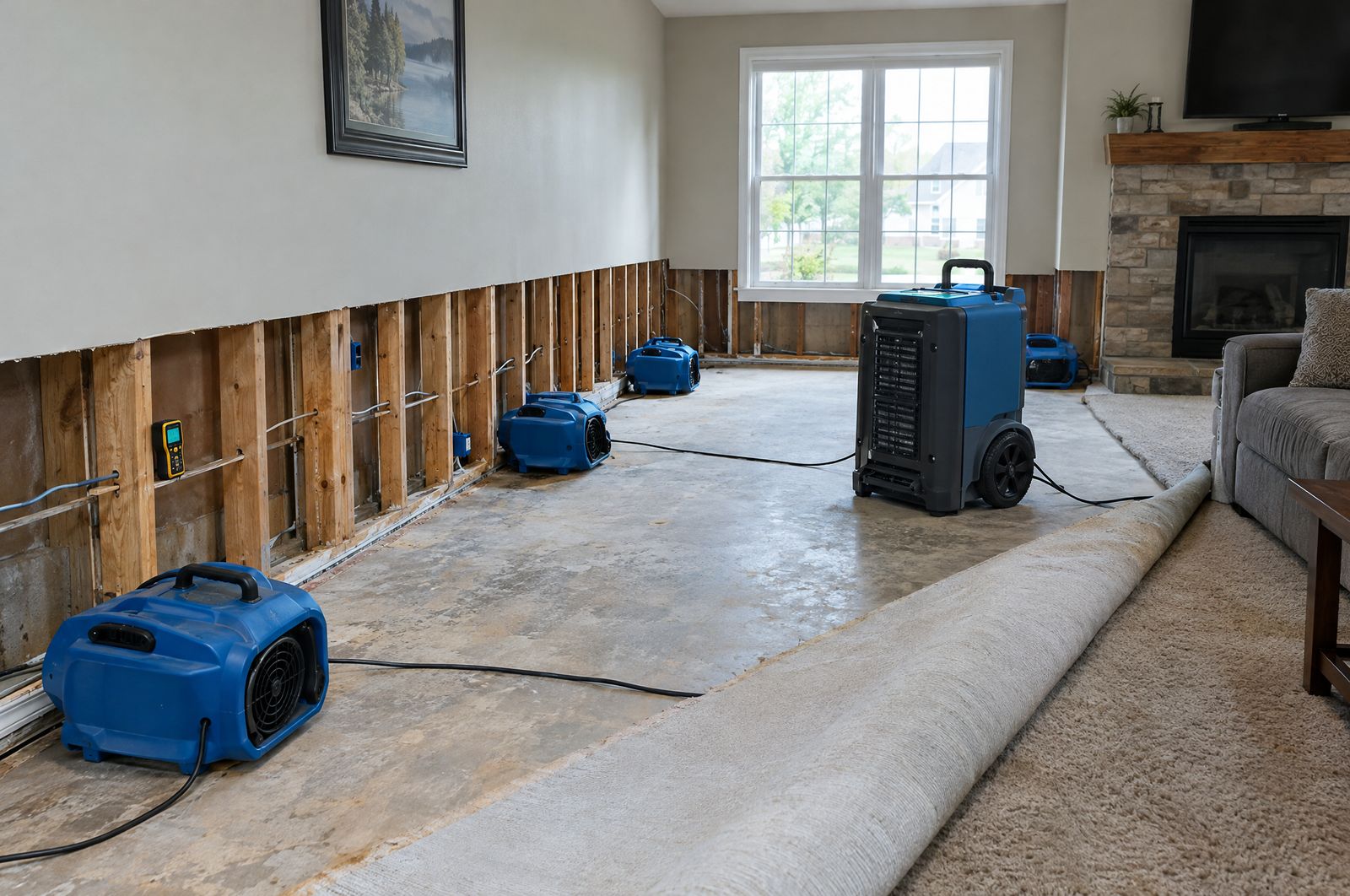
We size the drying setup to the room. Air movers push air across the wet surfaces, and dehumidifiers pull the water back out of that air. Depending on the space, that can mean LGR, conventional or desiccant dehumidifiers, plus wall cavity drying for water trapped behind drywall and drying heaters when the room needs heat. HEPA air scrubbers go in where the air needs cleaning while we work.
We check the equipment and take moisture readings every day. Each piece comes out as soon as the readings show its area is dry, so drying is billed by what the readings say, not by the calendar. You get copies of the readings and the photos, along with the estimate.
Drying is not finished when the surface feels dry. Water wicks up drywall and soaks into the subfloor and framing, where you cannot feel it. The readings measure what is inside the material, and that is what we go by.
Sudden water damage, like a burst pipe or a failed water heater, is the kind homeowners policies usually address, but every policy is different, so check yours. We write the estimate line by line in the pricing format insurance carriers use, and we meet the adjuster at the house if they want.
When the carrier's scope misses something, we explain what was missed and send a supplement. We cannot promise what a carrier approves, and the deductible is yours either way. You can usually choose your own contractor, even if the carrier suggests one. Because the estimate, the readings and the invoice all come from one company, they line up when the adjuster checks them.
While the equipment runs, we measure what came out and write the rebuild scope, so it is ready when the readings show dry. Once it is approved, we rebuild: insulation, drywall, tape and paint, baseboard and trim, flooring, and cabinets if the water reached them. One company is responsible from the first extraction to the last coat of paint, and any change to the scope is priced in writing and approved by you before it is done.
Call or text (815) 585-1750 at any hour, and send a photo if you can. It helps us bring the right equipment.
Tell us what needs doing. We will set up a time to come look at it, and you will have a written scope and price before anyone picks up a tool.
Call or text (815) 585-1750
Email matt@onitcc.com