
Sump pump failures, storm power outages and window well flooding pumped out, dried, fixed at the source and rebuilt.
Most basement water comes from a handful of causes. A sump pump fails or cannot keep up. A storm knocks the power out, and the pump stops right when the rain is heaviest. A window well fills during a downpour and spills over the sill. Water seeps through the slab or a foundation crack after a wet week.
The cause matters twice. It matters for fixing the problem so the basement stays dry next time, and it matters for your insurance, because how the water got in can change how a policy treats it.
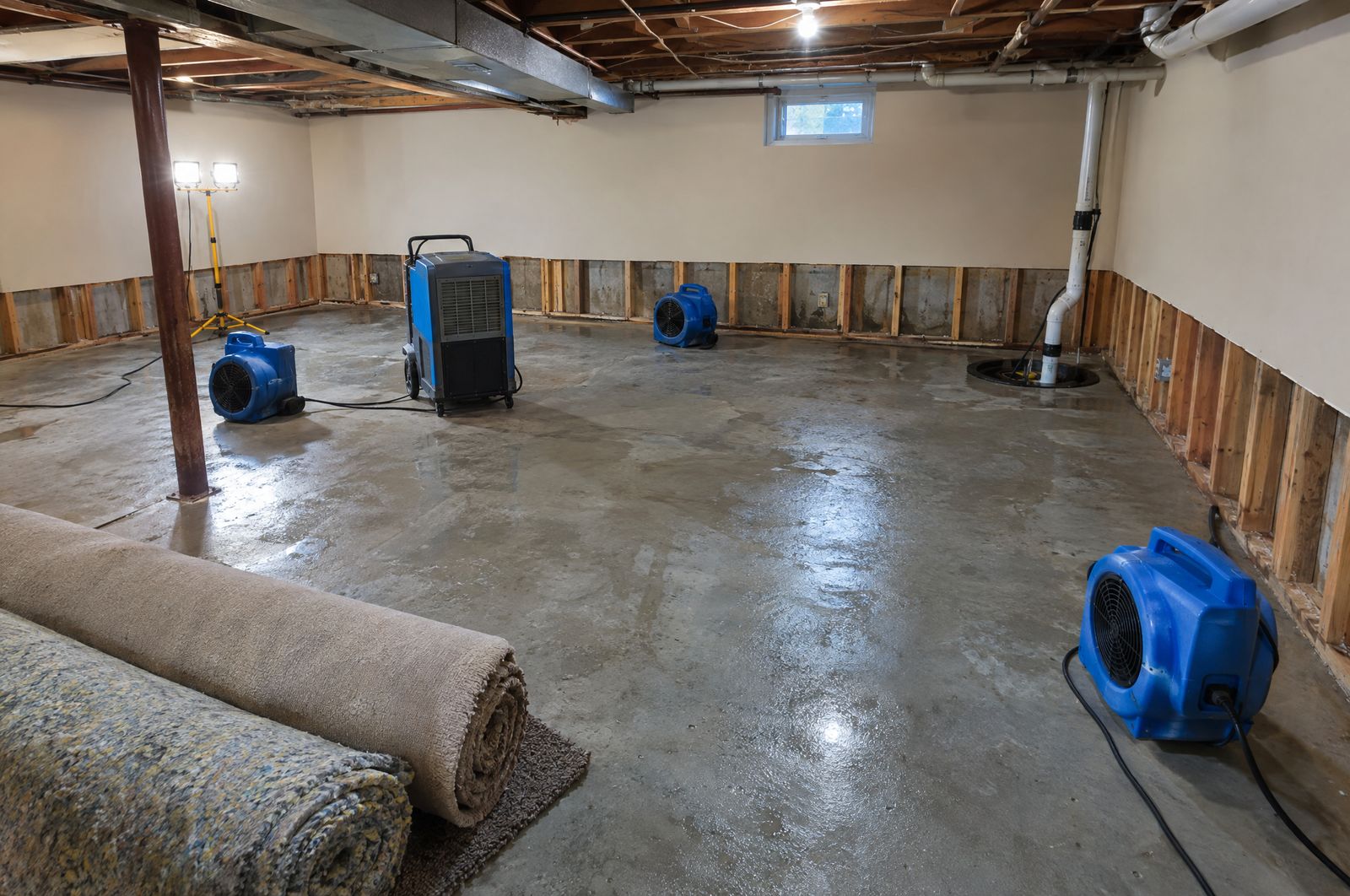
We extract the standing water first, then pull what cannot dry in place. In a finished basement, that usually means carpet and pad, baseboard, and a flood cut along the bottom of the drywall so the wall cavity can dry. We move and protect what is stored down there and haul off the wet materials.
Stored boxes on the floor usually take the worst of it. We move what we can to a dry part of the house so it is out of the way while we work, and you decide what stays and what goes.
Basements are cool and damp to begin with, so the dehumidifiers have to match the space. We size the air movers and dehumidifiers to the room, use wall cavity drying behind finished walls, and add drying heaters when the space is too cold to dry well. The daily rate for each piece is in writing before setup.
We check the equipment and take moisture readings every day, and the equipment comes out as soon as the readings show dry. You get copies of the readings, the photos and the estimate.
Finished basements hide water. It runs under the bottom plate, into the carpet pad and behind the drywall, so we take readings in the materials, not just on the surface.
Drying a basement that floods again with the next storm does not help anyone. When the sump pump is the problem, we replace it, and we install battery backup pumps that keep running when the power goes out. If the water came in through a window well or a crack, we show you what we found so it can be dealt with before the rebuild closes the walls back up.
A battery backup is worth a look even if your main pump is fine. The storms that drop the most rain are often the ones that take the power out, and a backup keeps the water moving until the power comes back. A window well usually fills when the drain at the bottom is blocked or there is no cover, and seepage through the slab or walls points to drainage outside the house.
Sewer or water backup is often a separate endorsement on a homeowners policy, and flooding from surface water outside is usually covered only by a separate flood policy. Check which you have, and ask your agent if you are not sure. Tell them exactly what happened, whether the pump failed, the power went out or water came in through a window well, because those details matter to the claim. We write the estimate line by line in the pricing format carriers use, meet the adjuster at the house if they want, and send a supplement when their scope misses something. We cannot promise coverage.
While the basement dries, we write the rebuild scope: insulation, drywall, paint, trim, flooring and anything else that came out. If the basement was finished, we put it back to match what was there. Call or text (815) 585-1750 at any hour with a photo of what you are looking at.
Tell us what needs doing. We will set up a time to come look at it, and you will have a written scope and price before anyone picks up a tool.
Call or text (815) 585-1750
Email matt@onitcc.com