
After the fire department leaves: damaged materials removed, soot cleaned, firefighting water dried out, odor handled at the source, then the rebuild.
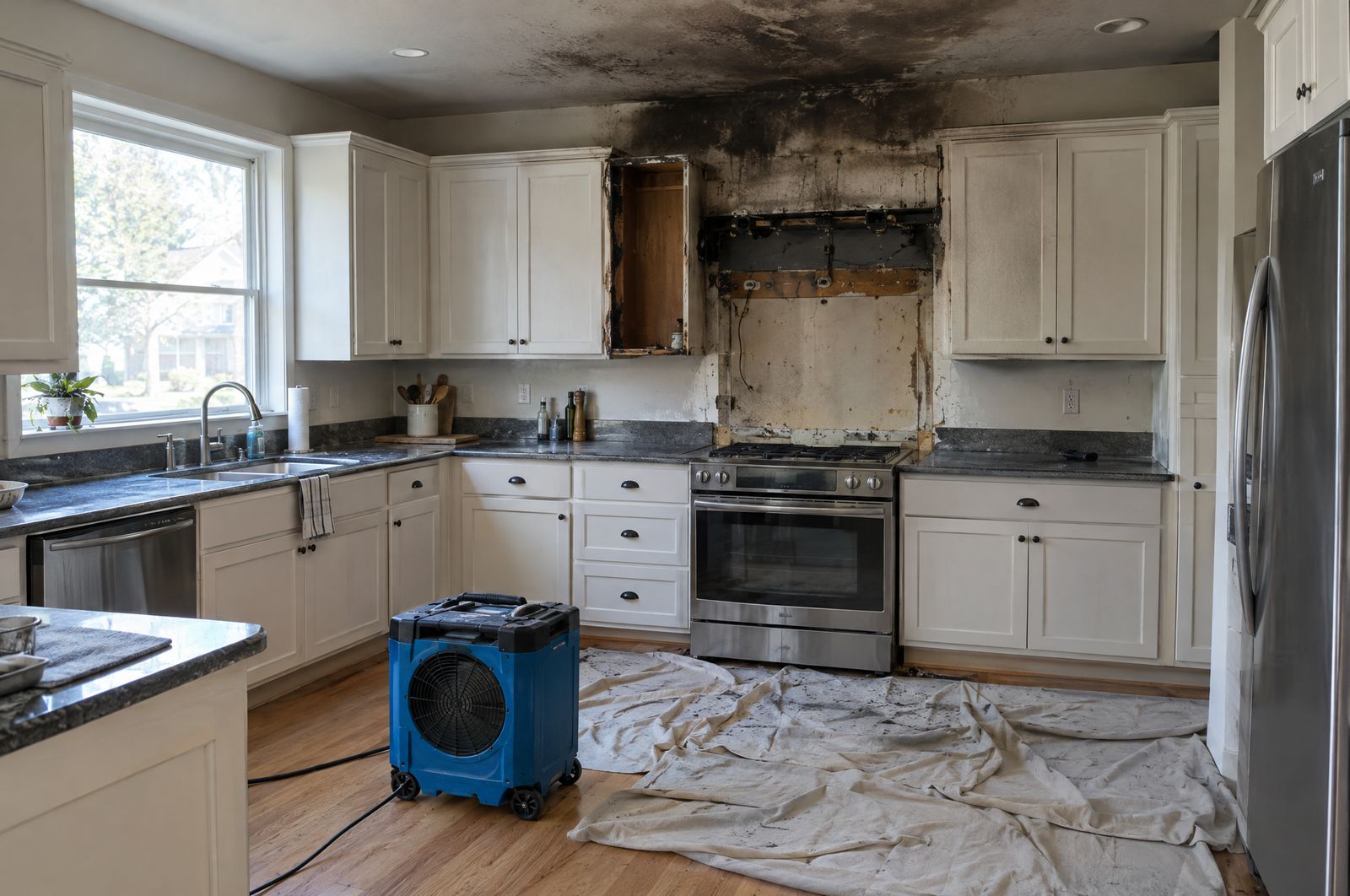
Do not go back in until the fire department says the house is safe to enter. Once it is, take photos of every room before anything is moved, and call your insurance company to open a claim. Then call or text us at (815) 585-1750. Keep your claim number handy and make a list of the affected rooms as you go through them. The photos and the list help the adjuster and help us write a complete scope.
A fire usually leaves three kinds of damage: what burned, what the smoke and soot reached, and the water used to put it out. Each one needs its own work, and all three have to be handled before the rebuild starts.
The water that put the fire out soaks into walls, floors and ceilings, often well away from the fire itself. We extract it and dry the house with air movers and dehumidifiers sized to the rooms. The daily rate for each piece is in writing before setup, readings are taken every day, and the equipment comes out as soon as the readings show dry. Wet carpet, pad and drywall that cannot dry in place come out.
Firefighting water gets less attention than the burned area, but it can be the bigger share of the work. Ceilings below an upstairs fire and walls next to the fire room can be soaked even where nothing burned.
We remove the materials the fire and heat damaged and haul them off. Soot is cleaned off the surfaces that stay, and HEPA air scrubbers clean the air while we work. Soot travels through the house on air currents, so we look at every room, not just the ones that burned.
Smoke odor lives in the materials it soaked into. We control it by removing the affected materials and sealing what stays before it is painted, so the odor is handled where it starts.
We write the estimate line by line in the pricing format insurance carriers use, and we meet the adjuster at the house if they want. Fire losses often turn up more damage once materials come out, and when the carrier's scope misses something, we explain it and send a supplement. You can usually choose your own contractor, and the deductible is yours. We cannot promise what the carrier approves.
A fire claim has several parts, because the burned area, the smoke, the soot and the water each have their own scope. Keeping all of it on one itemized estimate keeps it together for you and the adjuster. You get copies of the photos, the moisture readings and the estimate, so you have your own record of the loss.
We write the rebuild scope while the cleanup and drying are underway. Once it is approved, we rebuild what came out: framing where it was damaged, insulation, drywall, paint, trim, doors, flooring and cabinets, plus kitchens and baths when the fire reached them. One company is responsible from the cleanup to the last coat of paint, and any change to the scope is priced in writing and approved by you before it is done.
When the fire reached a kitchen or bath, the rebuild can mean new cabinets, counters, tile and fixtures. We match what was there, or price the options in writing if it is no longer made. Permits are pulled and inspections scheduled where the town requires them.
Tell us what needs doing. We will set up a time to come look at it, and you will have a written scope and price before anyone picks up a tool.
Call or text (815) 585-1750
Email matt@onitcc.com