First question: are these cabinets worth painting?
Paint changes the color of a cabinet. It does not fix the box underneath. Before anyone talks about white versus green, open the sink base and look. Swollen particleboard, a soft floor panel, peeling veneer or a musty smell under the sink all mean water got in, and paint over that damage will fail there first.
Layout matters just as much. If the kitchen does not work for you, because the dishwasher blocks a drawer or there is no room for a second cook, a new color will not change how the room works. That is a remodel conversation, and it is better to have it before you pay for a finish on cabinets you plan to replace.
Solid oak doors and boxes in sound shape are the best candidates. Oak is hard and holds a bonding primer well, and older oak doors are usually built well enough to be worth the labor.
- Paint is the wrong answer when the sink base or a panel next to the dishwasher is swollen or soft from water.
- Paint is the wrong answer when veneer is lifting off the doors or end panels.
- Paint is the wrong answer when you want to move the sink, add an island or change the layout.
How a cabinet paint job should run
The order of the work is what separates a finish that holds up from one that chips around the handles. Doors and drawer fronts come off first. Each one gets a number on tape or a tag that matches a map of the kitchen, so every door goes back on the box it came from. Hinges and hardware get bagged and labeled the same way.
Cleaning comes next, and it is the step people skip. Cabinets carry years of cooking grease, hand oil and cleaner residue, worst around the range and the trash pull-out. Primer will not bond to grease. Every surface gets degreased and rinsed before sanding, because sanding a greasy door just pushes the grease into the scratches.
After cleaning, every surface is scuff-sanded. The goal is to dull the old finish so the primer has something to grip, not to strip it to bare wood. Dents and gouges get filled and sanded flush.
- Doors and drawers are removed, labeled and mapped.
- Every surface is degreased and rinsed.
- Surfaces are scuff-sanded and dents are filled.
- Oak grain is filled, if you want a smooth look.
- A bonding primer goes on every surface that gets paint.
- Doors and drawer fronts are sprayed with a cabinet-grade enamel.
- Boxes, face frames and end panels are finished in place.
Oak grain: fill it or let it show
Oak has open grain, and paint does not hide it. After primer and finish coats you will still see the grain pattern through a painted oak door, just in the new color. Some people like that, because it reads as real wood under paint.
If you want a smooth, factory look, the grain has to be filled before priming. That means a grain filler or a high-build primer worked into the pores and sanded back, sometimes twice. It adds real labor to every door and frame, so it should show up as its own line on your estimate. Decide before the job starts, because grain filling cannot be added once the color coats are on.
Doors sprayed, boxes finished in place
Doors and drawer fronts get the best finish when they are sprayed in a set-up area away from the kitchen. A sprayed cabinet-grade enamel goes on without brush marks, and with the doors off the boxes, both faces and every edge get an even coat.
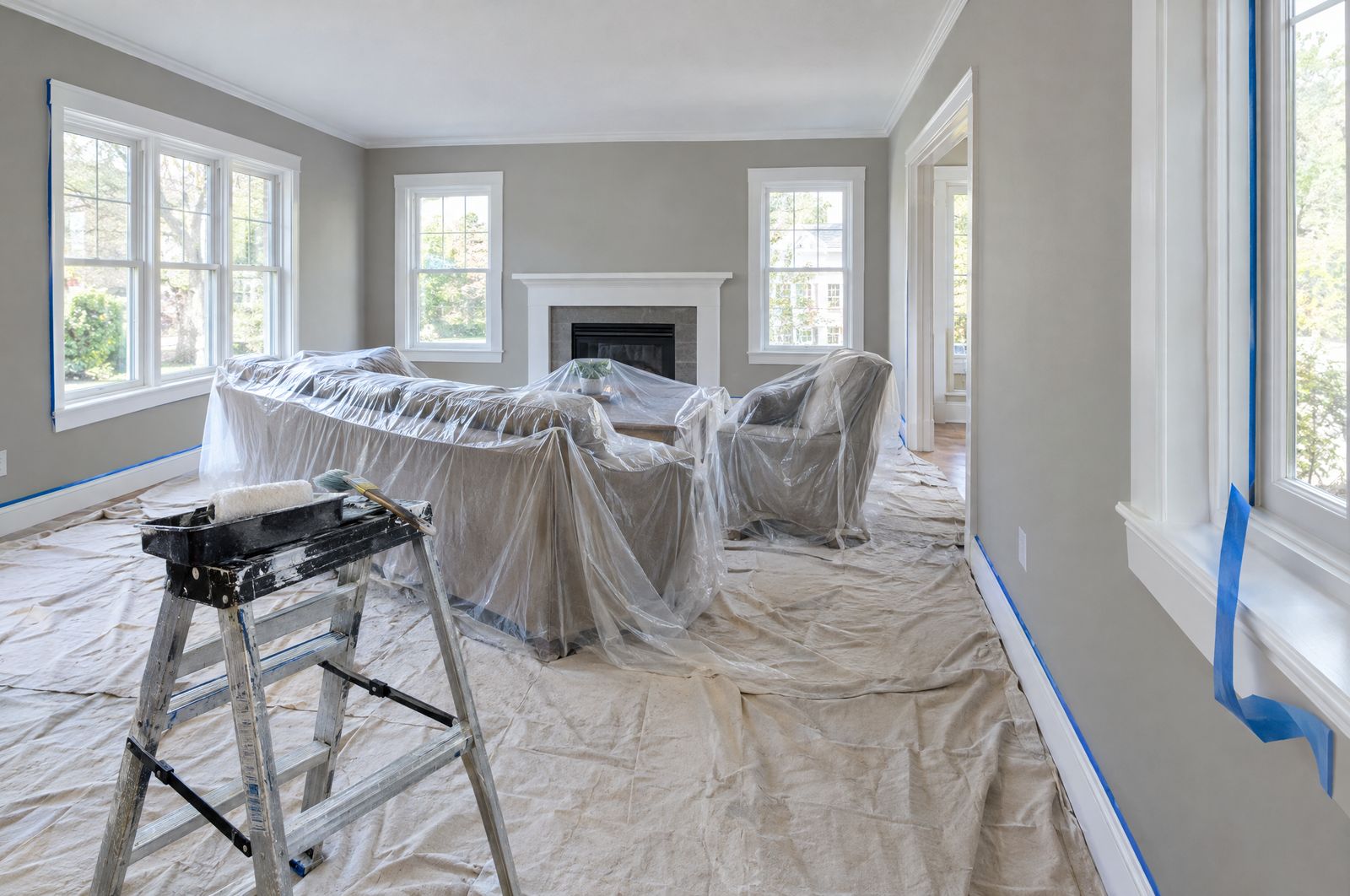
The boxes, face frames and end panels stay in the kitchen and get finished in place. That means masking the countertops, backsplash, floors, appliances and the cabinet interiors if they are not being painted. For this stage the kitchen is wrapped in paper and plastic, and the room should be cleaned when the masking comes down.
Ask whether the inside of the boxes is part of the price. Many people only paint the outside and the face frames. Painting the interiors adds time, and it should be written into the estimate either way.
How long your kitchen is partly out of use
This is the question everyone asks. The honest answer is that it depends on the size of the kitchen, the number of doors, whether the grain gets filled and how long each coat needs to dry. Every coat of primer and enamel needs its dry time before the next one goes on, and that time does not shrink because you need the oven for a birthday dinner.
While the boxes are being finished, the counters are masked and the cabinets are empty or covered. Plan on moving dishes and food to a folding table in another room, and plan on using the kitchen in a limited way. The fridge and the sink can often stay in use between work sessions, but ask your painter which areas will be covered on which days.
When the doors go back on, the finish is dry but not fully hard. Enamel keeps curing for weeks after it feels dry, so close doors gently, skip harsh cleaners for a while and keep damp towels off the sink door. A written schedule is a fair thing to ask any painter for.
New hardware and the holes it leaves
Painting is the best time to swap knobs and pulls. If the new pulls use the same hole spacing as the old ones, they go right back in the existing holes. If they do not, the old holes get filled and sanded before primer, and the new holes are drilled after the finish is on, with a jig so every pull lines up.
Bring your hardware choice to the estimate, or at least the hole spacing. Going from knobs to pulls, or from one spacing to another, adds work on every door and drawer, and it belongs in the written price. Look at the hinges too. Old exposed hinges can be cleaned and reused, replaced with new ones in the same footprint, or swapped for concealed hinges, which takes more work on each door.
New doors from a supplier, and what happens if the order is short
Some kitchens need a few new pieces: a door that split, a drawer front that swelled, or doors for an added cabinet. Those come from a supplier, and suppliers sometimes ship late or ship short. When that happens, the job cannot fully finish until the last pieces arrive.
Ask any painter how they handle that before you sign. A good answer is that they finish everything on site, then come back to prime, paint and hang the missing pieces when they arrive, with that return visit written down.
With us, the on-site estimate is free and written, and it lists each surface, the prep, the products and the number of coats. If something changes partway through, like a door that needs replacing or an extra coat on the boxes, we price it in writing and you approve it before we do it. For a fast read on whether your cabinets are worth painting, text photos of the doors, the sink base and the end panels to (815) 585-1750.