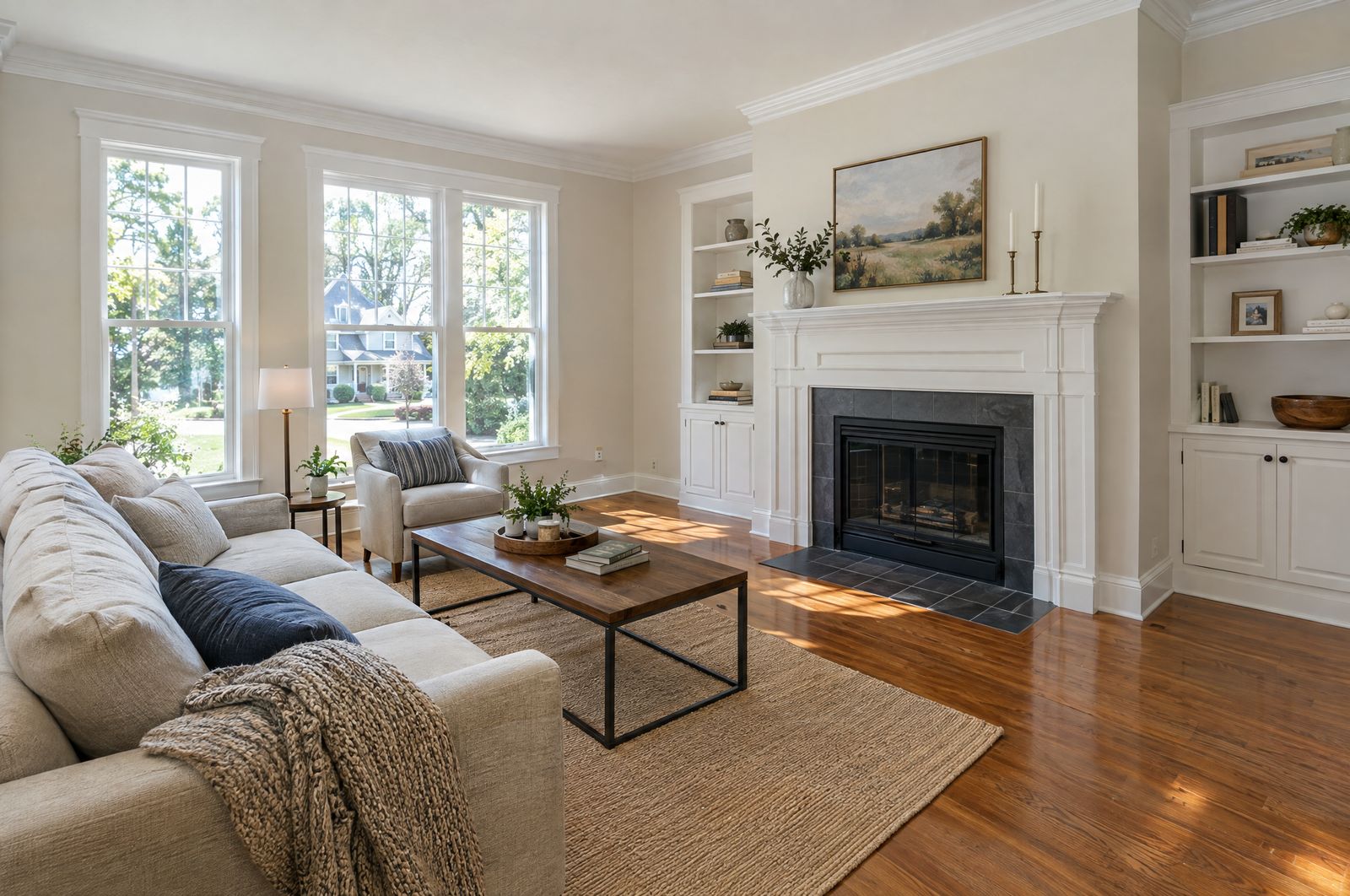
The number follows the hours, and prep takes most of them
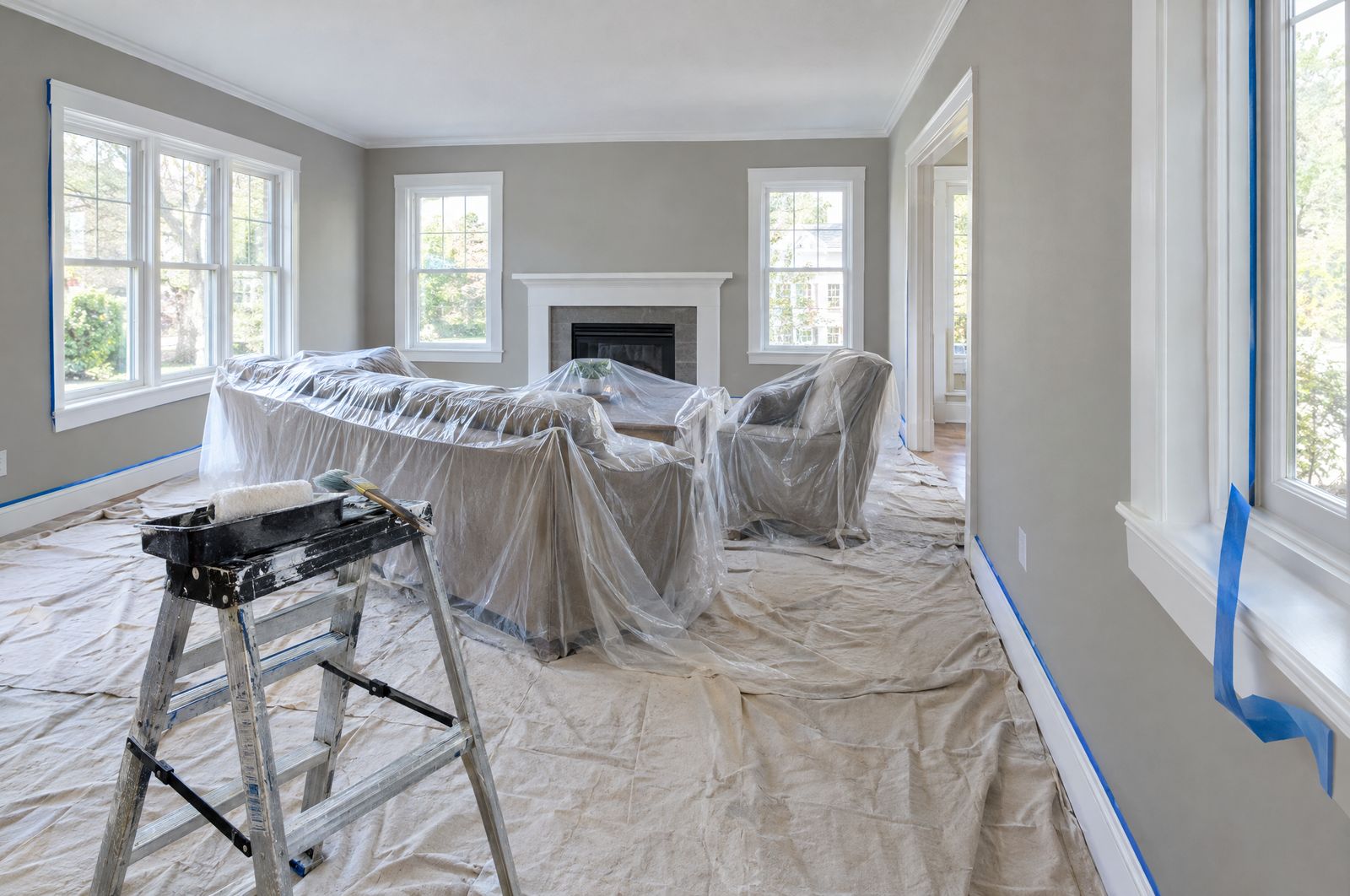
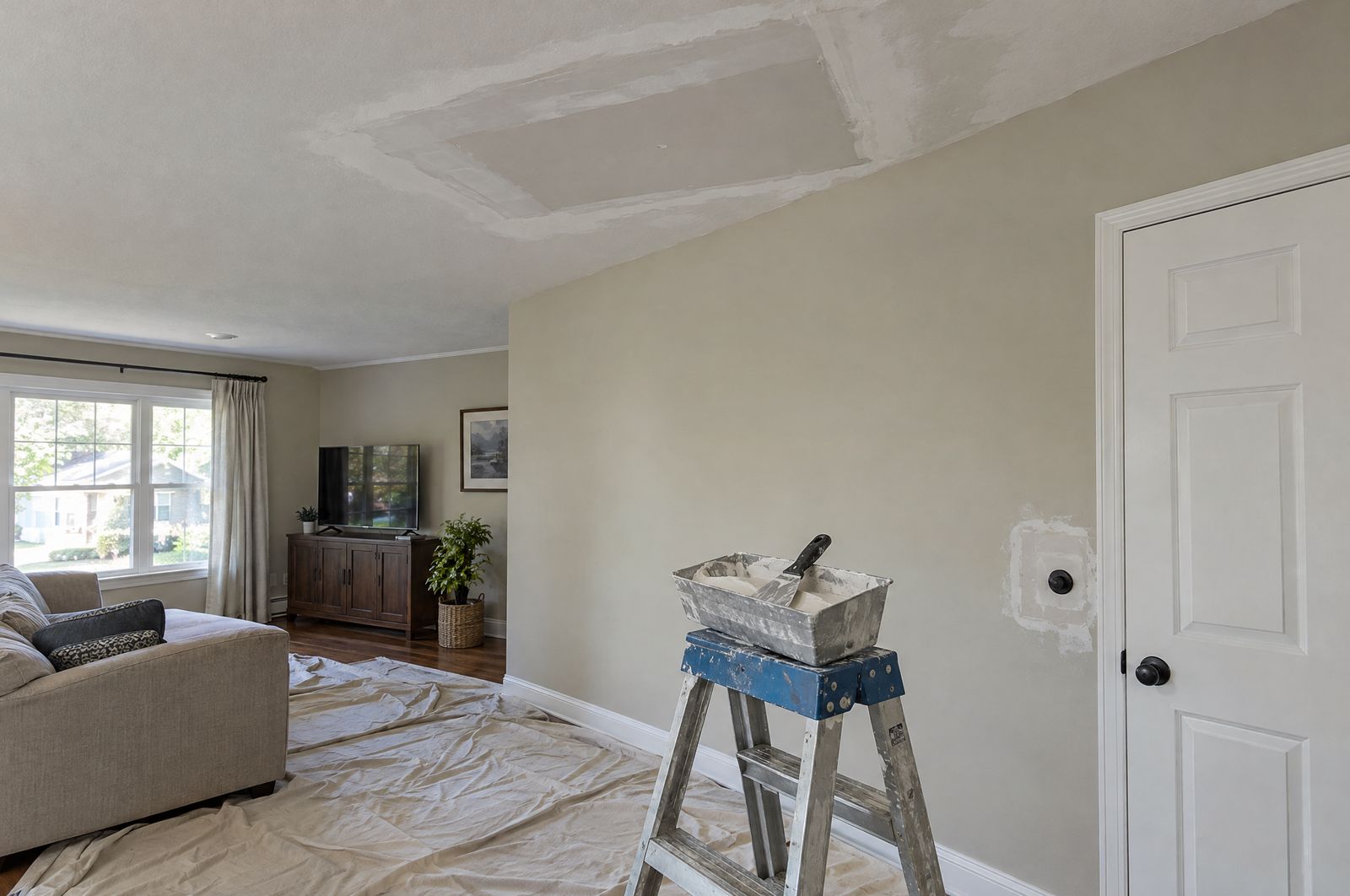
Paint is rarely the biggest part of a painting quote. Labor is, and most of that labor goes into work you will never notice once the walls are done: moving furniture, covering floors, filling holes, sanding, caulking gaps at the trim, priming patches and cutting in clean lines. Two painters can look at the same living room and plan very different amounts of that work.
One plans to fill the obvious nail holes and roll two coats. Another plans to sand down old drips, re-tape a lifted seam over the window, caulk every open trim joint and prime the patches so they do not show through the new color. Both of them are quoting the room. Only one of them is quoting the room you will still be happy with in two years.
What actually drives a painting quote
When you line up two quotes, these items usually explain the gap. Each one adds hours, materials or both, and any one of them can drop out of a one-line quote without anyone noticing until the work is done.
- Prep makes the biggest swing, because patching, sanding, caulking and priming can take longer than the painting itself.
- Repairs add steps, since nail pops, stress cracks, lifted tape and old patches each need their own fix before paint.
- The number of coats changes the hours on every wall, and primer plus two finish coats is a different job than one coat.
- Ceilings take longer than walls of the same size, and anything above a standard ladder needs taller ladders, planks and more setup.
- A color change, especially dark to light or covering a deep red, often needs a primer coat or a third finish coat.
- Trim, doors, window sills and stair parts are slow brush work, and some quotes leave them out entirely.
- Moving and covering furniture, protecting floors and cleaning up every day is real labor that some quotes skip.
Why the lowest number often skips prep
A low quote is not automatically a bad quote. A painter might have an opening in the schedule or a crew that works a room efficiently. But when one number sits well below the others, the most common reason is that less work is planned before the paint goes on. Prep is the first place to cut, because nobody can see it on the day the job is finished.
Skipped prep shows up later. Nail pops come back as bumps under the new paint. Cracks at the ceiling corners open again within a season or two. Patches that were never primed show as dull spots when light hits the wall from the side. Trim joints that were never caulked open up and collect dirt. By then the painter is gone, and the fix means painting the wall again.
A higher quote is not automatically better either. The goal is to find out what each number includes, so you are comparing the same job instead of two different ones.
How to compare quotes line by line
Ask every painter for a written estimate that lists the work, not one number at the bottom of a page. Then put the quotes side by side and check each of these questions against every one of them. If a quote does not answer a question, call and ask. The answer goes on paper before you sign.
- Does each quote list the same rooms and surfaces, including ceilings, closets, trim and doors?
- Does it say how many coats go on the walls, the ceilings and the trim?
- Does it name the products and the sheen for each surface?
- Does it describe the prep, including patching, sanding, caulking and priming repairs?
- Does it name the repairs the painter saw, like nail pops, cracks or a stained ceiling?
- Does it say who moves the furniture, how floors are covered and how cleanup is handled?
- Does it explain how a change, like an extra coat, gets priced and approved?
Questions that bring out the real difference
If two quotes still look very different after you line them up, ask each painter to walk you through one room. Ask what they plan to do with the crack over the doorway, whether the patched areas get primed, and whether the closet is included. Those answers tell you more than the totals do.
Ask what happens if the new color does not cover in the coats planned. A painter who has thought it through will tell you how an extra coat gets priced and that you approve it before it happens. Without that answer, an extra coat can turn up halfway through the job as a new charge.
Ask about the color itself, too. Changing a sample on your wall costs a lot less than repainting a finished room, and a color that looked right on the chip but wrong on the wall is a common reason a room gets painted twice.
How we write a painting estimate
Our estimates are free, done on site and written down. Each one lists every room or surface, the prep, the products and the number of coats, so you can hold it next to any other quote and see exactly what is covered.
If something changes once we start, like a color that needs another coat or a repair we find behind a wall, we price it in writing and you approve it before we do it. Color samples go on your wall before a full room is committed. Drywall repair, taping and finishing are done by the same crew before paint, and one person is accountable for the job from the estimate through the final walkthrough.
If you already have a quote in hand and want to know whether it covers the repairs you can see, text a photo of the problem areas to (815) 585-1750 for a fast read.