Paint has to cure, not just dry
Exterior paint has two jobs after it goes on. It has to dry, and then it has to cure, which is the slower process that gives it grip and toughness. A coat can feel dry to the touch within an hour or two and still be soft enough underneath for rain, dew or cold to damage it.
Every can lists a temperature range and a recoat time. Those numbers assume a reasonable day, and Illinois weather rarely stays reasonable for long. Spring brings rain on and off for weeks, summer brings heat and heavy humidity, and fall brings warm afternoons followed by cold nights and heavy dew.
We only paint outside on dry days warm enough for the paint to cure, and when the weather moves a day, we tell you. Whoever you hire, ask how they decide whether a day is a paint day and how they will let you know when it is not.
What each kind of weather does to fresh paint
Each weather problem shows up differently, and some do not show up until weeks later.
- Rain on fresh paint can wash it off, leave streaks or make it soften and run.
- Damp wood traps moisture under the paint, which later pushes it off as blisters and peeling.
- Heat and direct sun dry the surface too fast, which leaves lap marks and a weaker bond.
- High humidity slows drying and can leave a sticky, streaky film when dew settles on it.
- Cold nights and heavy dew stall the cure and can leave a dull, spotty finish.
- Wind blows dust and seeds into wet paint and dries the edges too fast.
Prep is most of an exterior job
Paint lasts only as long as the surface under it holds. Most of the hours on a good exterior job go into prep, and most exteriors that fail early failed because the prep was rushed.
- Wash the siding and trim to remove dirt, chalk and mildew, then let it dry fully.
- Scrape loose and peeling paint back to a sound edge.
- Sand the scraped edges so old paint lines do not show through the new coat.
- Prime every spot of bare wood before the finish coats go on.
- Replace rotted cedar siding, trim boards and sills instead of painting over them.
- Caulk open joints around trim, windows and doors, but leave the gaps that let siding drain.
Washing and rot: where shortcuts hide
Washing deserves a closer look. Too much pressure drives water deep into wood and behind siding, and that wood then needs days to dry before it can take paint. A wash should clean the surface without soaking the house.
Rot is the other place shortcuts hide. Paint over rot looks fine for a season, and then the wood swells and the paint splits. Soft spots at the bottom of trim, under window sills and at corners where water sits should be probed with a screwdriver and replaced. That is carpentry, and it belongs on the estimate as its own line.
Sometimes rot only shows up once scraping starts. When that happens on our jobs, we show you the wood, price the repair in writing and get your approval before the boards come off.
Protecting plants, new windows and the rest of the house
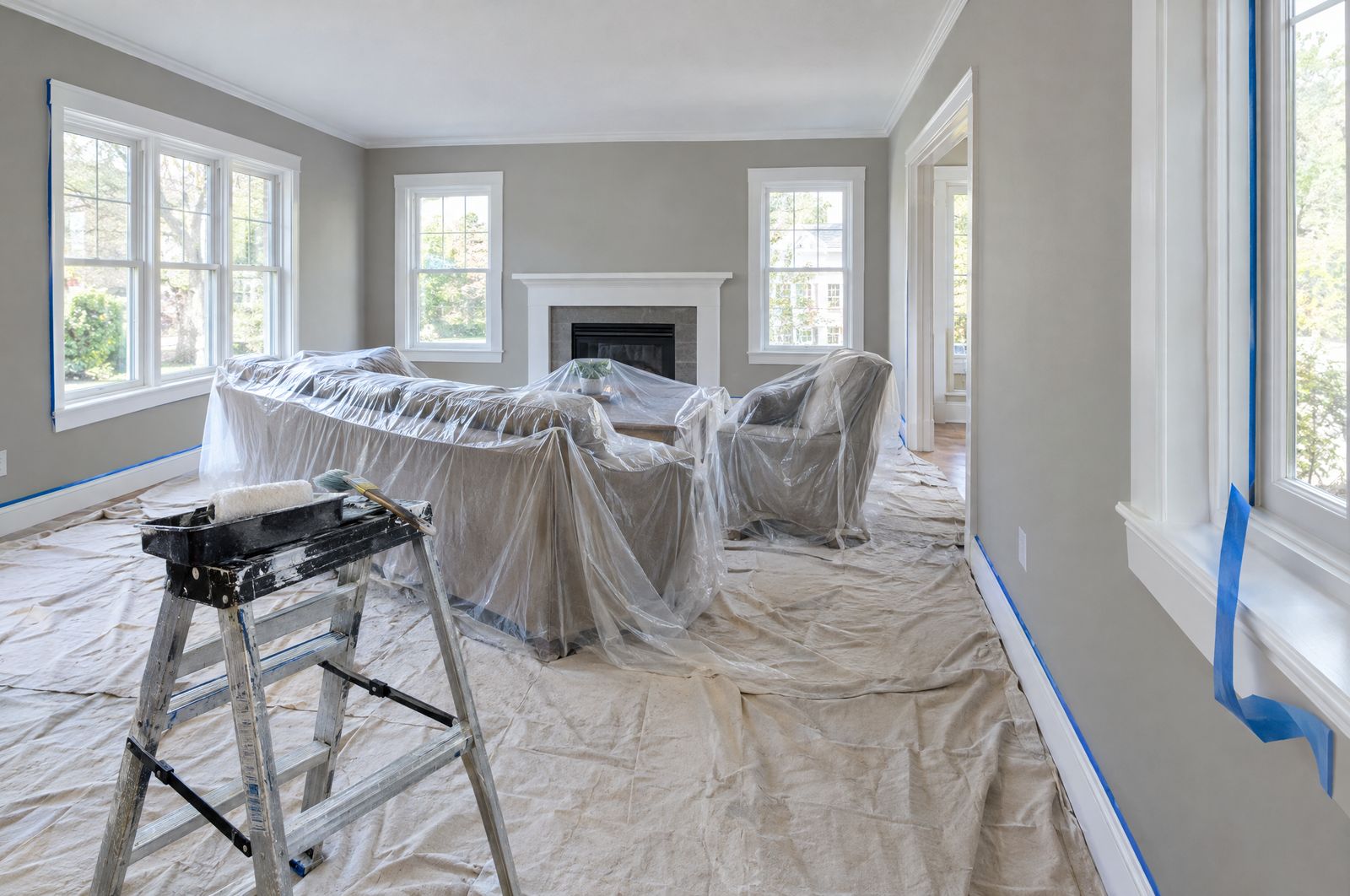
Exterior prep is messy. Paint chips fall into mulch, wash water runs into beds and overspray travels farther than people expect. Bushes and plants along the house should be covered with breathable drop cloths, not plastic left baking in the sun, and tied back from the siding where possible so the crew can reach the wall without trampling them.
New windows need extra care. Factory-finished vinyl or clad frames should be masked, not scraped around, and spraying anywhere near them only works with full masking. Ask any painter how they will protect windows, light fixtures, the AC unit, the driveway and the deck before the first day.
Walk the yard with your painter at the start. Point out the plants you care about, the flower pots, the hose and anything fragile near the walls. Moving a pot before work starts beats replacing it after.
Front doors, sidelights and garage doors
The front door is the first thing everyone sees, and it takes the most weather and the most hands. A painted front door should be cleaned, sanded and finished in an enamel made for doors, with the hardware removed or carefully masked. Weatherstripping should stay free of paint so the door still seals.
Sidelights and transoms have glass and narrow dividers, so they take slow, careful brush work. Cut lines on the glass should be clean and straight, and paint that lands on the glass has to be scraped off with a blade.
Garage doors are big, and they move. Steel doors need cleaning, any rust treated and primed, and a paint that flexes at the panel joints without cracking. Wood garage doors need the same prep as trim. Paint a garage door in the down position and let it dry before you run it, so the panels do not stick together at the seams.
Why a delayed day beats a failed finish
Nobody likes hearing that their start date moved. You took a day off, you moved the cars and you told the neighbors. But paint that goes onto a wet wall or into a cold night does not fail that day. It fails months later as peeling, blistering or a patchy finish, and the fix is to scrape and do the work over.
A moved day costs you a day. A failed finish costs you a repaint. That is the trade, and it is why we watch the forecast and the surface, not just the calendar.
If you are planning exterior work, build in some flexibility. Ask any painter how weather days are handled, how they will tell you, and whether a moved day changes anything on the price. For a read on rotted trim, peeling paint or a door that needs attention, text a photo to (815) 585-1750.